
Along the Tarim: A River, a Memory, and the Dreams We Pass On
Official Music Video
Debut Single & Official Music Video — Out Now!
Released October 27, 2026

All our lives, we imagine what lies ahead. Then, one day, we find ourselves watching someone else carry the dreams we once held.
Yellow leaves drift past a western window. The Tarim River winds on, as it always has.
Along the Tarim is a song about the passage of time, a world transformed, and the strange, beautiful persistence of dreams—how what once took root in our own lives can find new life in someone else's, carried forward like a river into the distance.

An ancient river finds new tributaries. Its echoes flow westward.

Yellow leaves loosen from their branches and travel west on the northern wind.

We ask where the road began, yet who among us knows the way home?

Across the vast desert, the river rises from snowmelt in the distant mountains.

One leaf rides the wind for a thousand miles; one river carries a thousand years of dreams.

Yellow leaves pass the western window.
The old homeland lingers in a dream.
Beneath the far-western sky, an ancient song arrives on the wind, crossing a thousand mountains.
Many Places. One River.
Western Colorado, USA. Tashkent, Uzbekistan. Hohhot, Inner Mongolia, China. And other locations across Eurasia. Separated by vast distances, these places come together in a single music video. Yet throughout the song, one name keeps returning:
The Tarim River.
Written in Chinese, English, and Uyghur, Along the Tarim was never conceived as one song translated into three languages. From the beginning, all three belonged to the same work, each bringing its own voice and emotional expression into a shared musical landscape.
The song comes from Living Mythologies (神话接力), an international band creating original music through encounters between different traditions, languages, and individual artistic voices.
The Tarim River flows through Xinjiang in western China, across a landscape shaped by mountains, desert, and centuries of human history. Its waters are fed by distant mountain ranges, carrying snowmelt through one of the world's great arid regions.
In the song, the river is both a real place and a point of departure. Its name evokes memories of home, while the music follows those memories into places far beyond its banks.
The story begins with a simple image.
Yellow leaves, passing by me, in the wind…
The English lyrics introduce the drifting leaves and the passing of time. Chinese and Uyghur voices return to the river and its associations with homeland and memory. Rather than repeating a single text in translation, the languages contribute different perspectives to the same musical journey.
Around them, the sounds of plucked strings, percussion, bass, keyboards, and layered vocals create a meeting point between traditional instruments and contemporary production.
The river runs through it all.
Where have we come from? Where are we going?
One Yellow Leaf, From “Me” to “Them”
There is a subtle shift at the heart of this song.
At first, yellow leaves pass by me.
Later, those same leaves pass by them.

Yellow leaves, passing by me…
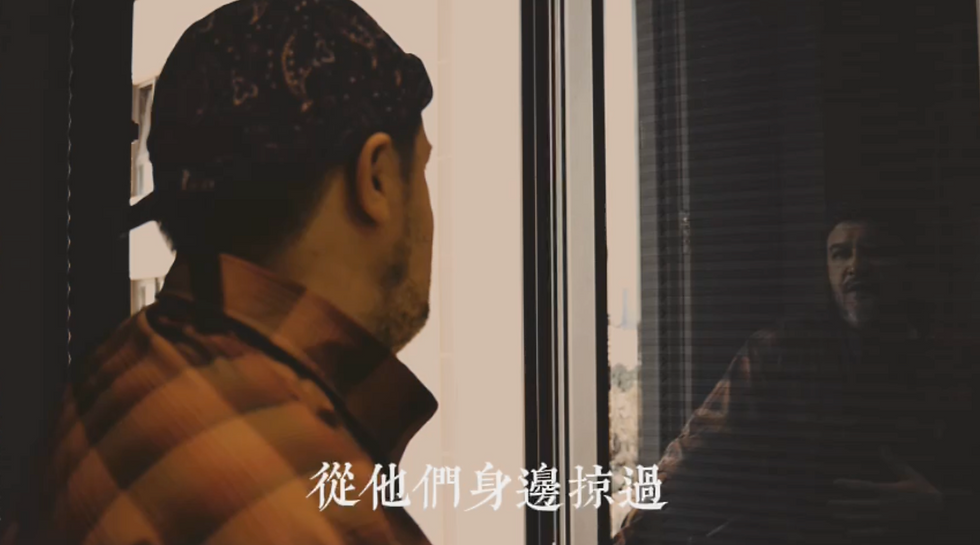
Yellow leaves, passing by them…
The wind seems unchanged.
The river keeps moving.
But the people standing in its path are no longer the same.

What begins as a personal memory gradually becomes something larger.
A leaf passes a window. A child's dream comes true. Another generation watches as the world it once knew gives way to something new.
The dreams we carry are not always the dreams we get to fulfill. Sometimes they find their way into other lives, taking on shapes we could never have imagined.
The shift from me to them is small, almost easy to miss, yet it changes the perspective of the entire story.
Someone who once stood at the center of a dream is now watching it continue elsewhere.
And across the different languages of the song, the voice keeps returning to the Tarim:
I remember the place where it meanders the most.
塔里木河,我家乡!
تارىم دەرىيېسى، مەن تارىم دەرىيېسى
The river becomes a thread connecting childhood and adulthood, memory and possibility, the lives we have already lived and those still unfolding.
It carries what changes, and what remains.
How Do These Musicians Become One Band?
Musicians from Aksu, Ulanhot, and Shenzhen in China, alongside artists from Vietnam and the United States, have come together through Living Mythologies.
They bring different languages, instruments, musical backgrounds, and personal histories. The challenge is not simply to place these differences side by side, but to discover how they can work together within an original song.
The musicians featured in the video:
Andy Bauer · Azmat Hekim · Tran Nguyen

Ji Peng · Mergen Shi · Seva Ivanov

Photography: Curve Studio · Tanya Sokol · Intarsia Media Productions, Inc.
Andy Bauer's lead vocals and bass guitar help establish the contemporary character of the music, while his approach to multilingual songwriting connects its different lyrical worlds. Azmat Hekim brings a distinctive performing presence to the video, helping give its reflections on memory and human experience a visible form.
Tran Nguyen contributes original Chinese lyrics, choral vocals, and the rhythmic sound of the Sapayi, a traditional Uyghur percussion instrument. Ji Peng plays the Rawap, a Uyghur lute whose plucked strings add a distinctive timbre to the arrangement.
Mergen Shi contributes choral harmonies and Ezengileer, a style of Tuvan throat singing distinguished by its rhythmic, pulsing vocal textures. Seva Ivanov brings his percussion playing into the ensemble, while Sorju Sounds contributes keyboards and musical arrangement.
Together, these elements give the composition a character that is difficult to reduce to a single genre. The Rawap has its own unmistakable voice, but it exists alongside electric bass and keyboards. Traditional percussion contributes to a broader rhythmic language, while contemporary vocal production creates space for the different singing styles.
Yet Living Mythologies is not a world music sampler.
It is a band.
There are songs, rock, groove, improvisation, and experimentation. Traditional instruments are not there as decoration, and modern production does not have to flatten what makes each musician's sound distinctive.
Nor is there a predetermined formula for fusion.
The musicians do not have to sound alike to play together. Their differences become part of the composition, opening possibilities for unexpected rhythms, textures, and melodic relationships.
Each voice makes room for the others.
The music emerges from what happens between them.
How a Music Video Came Together Across Continents
The production of Along the Tarim brought together performers and filmmakers working across North America and Eurasia, connecting distant locations through a shared musical and visual narrative.
These locations were not chosen to reproduce the landscape of the Tarim River. Each became part of the music video's visual language, contributing a different environment and perspective.

Western Colorado, USA — Gateway

Tashkent, Uzbekistan

Hohhot, Inner Mongolia, China

Behind the scenes: Filming percussionist Seva Ivanov for Along the Tarim
What connects these places is not geographical resemblance.
It is the song itself.
A river in western China becomes the point of connection between musicians and filmmakers living thousands of miles apart. Images created in different environments are brought together through a common musical narrative.
That distance gives the video another dimension. The landscape of the Tarim is not simply a destination to be filmed. It is a place remembered and imagined from elsewhere.
The video follows that idea outward, allowing the song to inhabit places that are physically distant from the river but connected through the experiences of the people making the music.
In this sense, geography becomes part of the storytelling.
The music itself has traveled a journey of its own.

Music Made Across Three Distinct Regions
The Making of the Music Video
The creation of Along the Tarim brought together musicians, filmmakers, and production teams working thousands of miles apart.
Filming took place in Western Colorado, Tashkent, Hohhot, and other locations across Eurasia. Each setting offered a different visual atmosphere, from the expansive landscapes of the American West to performances captured in studios and other environments. Among these was the studio filming of percussionist Seva Ivanov, whose performance became part of the project's international production process.
Through editing and color grading, footage captured across these locations was brought together into a single visual narrative, connecting different landscapes and performers through the song's recurring imagery of memory, distance, and the passing of time.
[VIDEO — Behind the Scenes: The Making of Along the Tarim — Curve Studio, Hohhot, Inner Mongolia]
For Living Mythologies, this process reflects the way the music itself comes together.
Every encounter opens another possibility. Every new voice offers a song the chance to travel somewhere unexpected.

Music Video Production Process (Along the Tarim)
Perhaps this reveals something of what Living Mythologies means: not preserving stories as finished things, but allowing them to continue through the people who encounter them, reshape them, and carry them forward.
A myth lives because it is told again. A song lives because someone else makes it their own.
I Remember the Place Where the River Meanders Most
Near the end of the song, the yellow leaves return.
From me to them. From childhood dreams to the passage of generations. Everything is moving, everything is changing.
But one line remains.

Oh, Tarim River. Oh, my homeland.
Perhaps home is not always a place we can return to.
Sometimes it is the bend of a river, a gust of wind preserved in memory, or a melody that still rises within us after a long journey.
Perhaps the most compelling new music does not come from making the sound bigger, but from making the space around it larger.
A space in which different languages can speak without losing themselves. Different traditions can meet without becoming indistinguishable. Different lives can enter the same story and leave it changed.
This is the space Living Mythologies is exploring.
Not by recreating the past, but by making music in the present—with all the memories, contradictions, and possibilities that the present contains.
The river keeps winding forward.
And somewhere, someone else is beginning to dream.
Where is the river YOU remember? 🍂
Living Mythologies — Along the Tarim
Debut Single & Official Music Video — October 27, 2026
Listen on streaming platforms:
Full Lyrics
Yellow leaves passing by me in the wind…
A child’s dreams come true…
From where have we come and where will we go?
The river meanders forward, pushed by distant snows…
Yellow leaves meander too whispering stories of all time…
Man tarim deriyesi (مەن تارىم دەرىيېسى)...
I have been passed the bend where it meanders the most…
Man tarim deriyesi (مەن تارىم دەرىيېسى)...
Oh… Tarim river! (哦,塔里木河我家乡!)
Yellow leaves passing by me in the wind…
Yellow leaves telling that the times have shifted…
Yellow leaves whirling passed a window...
A child’s dreams come true...
Oh… Tarim river! (哦,塔里木河我家乡!)
Yellow leaves passing by me in the wind…
I remember the place where it meanders the most…
Tarim deriyesi… (تارىم دەرىيېسى)
man tarim deriyesi… (مەن تارىم دەرىيېسى)
Yellow leaves passing by them in the wind…
Yellow leaves telling them the times have shifted…
Yellow leaves, rolling past a window…
As a child’s dreams come true…
Transliteration Highlights
CHINESE · MEMORY AND HOMELAND
“我记得那个地方是它最蜿蜒的地方……”
or: I remember the place where it meanders the most.
→ The river's winding course becomes a landscape of memory, where the places we once knew remain with us even as life carries us elsewhere.
JAPANESE · THE PASSING OF GENERATIONS
“風に乗って 黄色い葉が彼らのそばを通り過ぎる…”
or: Carried by the wind, yellow leaves pass by them.
→ The perspective moves from the individual to another generation, preserving the song's central emotional shift.
RUSSIAN · THE QUESTION OF EXISTENCE
“Мы откуда пришли и куда уйдем?”
or: Where have we come from, and where will we go?
→ The song becomes a reflection on the mysteries of origin and destination.
TUVAN · THE RIVER'S JOURNEY
“Эргим хемим дыйлаӊайнып маӊнапты…”
or: My beloved river winds and rushes onward.
→ The river itself becomes a living presence, carrying everything forward.
VIETNAMESE · THE PASSAGE OF TIME
“Lá vàng kể về sự thay đổi của thời gian”
or: Yellow leaves tell of the changing times.
→ The leaves become witnesses to the passing of an era.
UYGHUR · IDENTITY AND BELONGING
“مەن تارىم دەرىيېسى”
or: I am the Tarim River.
→ The singer identifies with the river itself, transforming a geographical place into an expression of belonging and personal identity.
Full Translations
CHINESE《塔里木河》
By: Mergen Shi
风中黄叶从我身边掠过……
黄叶隐射我那个时代结束了....
黄叶从一个窗户看着,孩子的梦想成真……
黄叶从窗户看着
那个时代我们从哪里来,又将到哪里去?
这条河在远处的雪的推动下蜿蜒向前流去。
黄叶蜿蜒低语着历史的故事…
Man tarim deriyesi...
我也曾走过弯弯最曲折的地方。
Man tarim deriyesi...
哦, 塔里木河我家乡!
风中黄叶从我身边掠过……
黄叶诉说着时代的变迁
黄叶飞扬着飘过一扇窗…
一个孩子的梦想成真...
哦, 塔里木河我家乡!
风中黄叶从我身边掠过……
我记得那个地方是它最蜿蜒的地方...
Man tarim deriyesi…
JAPANESE 『タリム川に沿って』
By: Ji Geer
風に乗って 黄色い葉が私のそばを通り過ぎる…
子どもの頃の夢がかなう…
私たちはどこから来て どこへ行くのだろう?
遠い山々の雪解け水に押されて 川は曲がりくねりながら流れてゆく…
黄色い葉も曲がりくねるように舞いながら 遠い時代の物語をささやく…
Man tarim deriyesi(مەن تارىم دەرىيېسى)…
私もかつて あの川が最も大きく曲がる場所を通り過ぎた…
Man tarim deriyesi(مەن تارىم دەرىيېسى)…
ああ… タリム川よ! 私の故郷よ!
風に乗って 黄色い葉が私のそばを通り過ぎる…
黄色い葉が 時代の移り変わりを告げる…
黄色い葉が 窓辺をくるくると舞い過ぎる…
子どもの頃の夢がかなう…
ああ… タリム川よ! 私の故郷よ!
風に乗って 黄色い葉が私のそばを通り過ぎる…
あの川が最も大きく曲がる場所を 私は覚えている…
Tarim deriyesi(تارىم دەرىيېسى)…
Man tarim deriyesi(مەن تارىم دەرىيېسى)…
風に乗って 黄色い葉が彼らのそばを通り過ぎる…
黄色い葉が彼らに 時代の移り変わりを告げる…
黄色い葉が 窓辺を転がるように過ぎてゆく…
子どもの夢がかなってゆく…
TUVAN «Тарим хем»
By: Мария Кужугет
Салгын-хатка сывыртаткан
Сарыг бүрү чаным-биле эстеп эртти…
Чашкы шаамда бодап алган
Чажыт бодалдарым бүттү.
«Кайыын келгеш, кайнаар чоруй баар бис?» -
Харыыны бо айтырыгга тыппас бис.
Эрээн хар суу холчу бээрге, бурунгаар
Эргим хемим дыйлаӊайнып маӊнапты…
Хадып тояан бүрүлерниӊ сымыдындан
Каш шагныӊ төөгүзүн дыӊнап кагдым…
Шак ол оруктуӊ амдыы ээр черинден
Чазыг чок эрткеш, эргилип чоруптум…
О! Тарим хемим!
Чаа хатка бөөлдеткен сарыг бүрүлер
Чаным-биле салбараӊнап эртип турлар…
Олар үе-шаг өскерилгенин
Оожум үн-биле сымырандылар…
Хайымныг самын соӊга чанынга
Казыргылап, тырыкылап эстээрге,
Хайгаарадым – кайгамчык-тыр!
Чашкы шаамда бодап алган
Чажыт бодалдарым бүттү.
О! Тарим хемим!
Салгын-хатка бөөлдеткен сарыг бүрү
Чаным-биле салбараӊнап эртип турлар…
А мен ол орукту сактып тур мен.
Амдыы ооӊ хенертен ээптер черин…
UYGHUR «تارىم»
By M.E.
مەن تارىم بويىغا كەتتىم
كۆيۈشكەن يارلار خوش ئەمدى
بىللە ئويناپ بىللە ئۆسكەن
ئارزۇ كۆڭۈللەر خوش ئەمدى
ئەي... ئا... يارەي
ئارزۇ كۆڭۈللەر خوش ئەمدى
مەن تارىم بويىغا بېرىپ
ھارماي تالماي ئىشلەيمەن
ئەگەر كەلسەڭ تارىمغا
گۈل چېچەككە ئورايمەن
ئا... ئا... يارەي
گۈل چېچەككە ئورايمەن
مەن تارىم بويىغا كەتتىم
كۆيۈشكەن يارلار خوش ئەمدى
بىللە ئويناپ بىللە كۈلگەن
ئارزۇ كۆڭۈللەر خوش ئەمدى
ئا ... ئا ... يارەي
ئارزۇ كۆڭۈللەر خوش ئەمدى
ئا... ئا... يارەي
ئارزۇ كۆڭۈللەر خوش ئەمدى
ئا... ئا... يارەي
ئارزۇ كۆڭۈللەر خوش ئەمدى
UZBEK «Tarim bo‘ylab»
By: Ji Geer
Sariq yaproqlar shamolda yonimdan uchib o‘tadi…
Bolalikdagi orzular ro‘yobga chiqadi…
Biz qayerdan keldik va qayerga ketamiz?
Olisdagi qorlarning erigan suvlari daryoni burilib-burilib olg‘a oqizadi…
Sariq yaproqlar ham buralib uchib, barcha zamonlarning hikoyalarini shivirlaydi…
Man tarim deriyesi (مەن تارىم دەرىيېسى)…
Men ham daryoning eng ko‘p burilgan joyidan o‘tganman…
Man tarim deriyesi (مەن تارىم دەرىيېسى)…
Oh… Tarim daryosi! Ona yurtim!
Sariq yaproqlar shamolda yonimdan uchib o‘tadi…Sariq yaproqlar zamonlar o‘zgarganini aytadi…Sariq yaproqlar deraza yonidan girdikapalak bo‘lib o‘tadi…
Bolalikdagi orzular ro‘yobga chiqadi…
Oh… Tarim daryosi! Ona yurtim!Sariq yaproqlar shamolda yonimdan uchib o‘tadi…
Men daryoning eng ko‘p burilgan joyini eslayman…
Tarim deriyesi (تارىم دەرىيېسى)…
Man tarim deriyesi (مەن تارىم دەرىيېسى)…
Sariq yaproqlar shamolda ularning yonidan uchib o‘tadi…
Sariq yaproqlar ularga zamonlar o‘zgarganini aytadi…
Sariq yaproqlar deraza yonidan yumalab o‘tadi…
Bir bolaning orzulari ro‘yobga chiqarkan…
RUSSIAN «Река Тарим»
By: Prokhor Smashnikov
Жёлтые листья проносятся мимо меня, подгоняемые ветром...
И сбываются те мечты, о которых я думал в детстве.
"Мы откуда пришли и куда уйдем?", — нет на эти вопросы ответов,
А река извиваясь, мчится вперёд, подпираемая талым снегом...
Я услышал истории всех времён, во блужданьи шепота листьев...
И прошёл поворот в самом месте том, во котором он был извилист...
О! Река Тарим!
Листья жёлтые проносятся мимо меня, подгоняемые новым ветром...
И вполголоса мне они говорят о том, что сменилось время...
И кружатся они в танце вихревом возле окна, наблюдать мне за ними — блаженство!
И сбываются те мечты, о которых я думал в детстве...
О! Река Тарим!
Подгоняемые ветром, мимо меня проносятся жёлтые листья...
Да, я помню тот самый крутой поворот, во котором был извилист...
VIETNAMESE (Chủ đề: Sự gặp gỡ của các thế hệ)
By: Tran Nguyen
Những chiếc lá vàng lướt qua tôi trong gió ...
Những chiếc lá vàng ám chỉ rằng thời đại của tôi đã qua ...
Chiếc lá vàng nhìn qua ô cửa sổ, giấc mơ tuổi thơ đã thành hiện thực ...
Nhìn lá vàng từ cửa sổ
Chúng ta đến từ đâu, và chúng ta sẽ đi đâu?
Dòng sông uốn khúc về phía trướ
c, đổ về miền tuyết trắng ở phía xa.
Lá vàng thì thầm câu chuyện lịch sử ...
Man tarim deriyesi...
Tôi cũng đã đi những nơi quanh co nhất.
Man tarim deriyesi...
Ôi ... Sông Tarim! Ôi, sông Tarim quê hương tôi!
Những chiếc lá vàng lướt qua tôi trong gió ...
Lá vàng kể về sự thay đổi của thời gian
Những chiếc lá vàng bay ngang khung cửa sổ ...
Giấc mơ thời thơ ấu thành hiện thực ...
Ôi ... Sông Tarim! Ôi, sông Tarim, quê hương của tôi!)
Những chiếc lá vàng lướt qua tôi trong gió ...
Tôi nhớ nơi đó là nơi quanh co nhất ...
Man tarim deriyesi...
Production Credits
Music Video Production
Video Direction: Intarsia Media Productions, Inc.
Music Video Producer: Intarsia Media Productions, Inc.
Directors of Photography: Zhixiu Li (李炙修) – Curve Studio; Tanya Sokol
Camera Operators: Anton Ivanov, Mikhail Smith, Yizhuo Li (李屹倬, E.J.) – Curve Studio, Intarsia Media
Studio Producer: Zhixiu Li (李炙修) – Curve Studio
Gaffer: Andrew Allan
Costume Design & Wardrobe: Amala Lezbera, Intarsia Media Productions, Inc.
Makeup: Curve Studio, Ismailov Xojiakbar
On-Screen Performers: Azmat Hekim, Andy Bauer, Tran Nguyen, Ji Peng, Mergen Shi, Seva Ivanov & Lam Khanh
Music Video Post-Production
Video Editing: Intarsia Media Productions, Inc.
Color Grading: Intarsia Media Productions, Inc.
Music Production
Music Producer: Intarsia Media Productions, Inc.
Lead Vocals: Andy Bauer
Choral Vocals: Tran Nguyen, Mergen Shi
Ezengileer (Tuvan Throat Singing): Mergen Shi
Rawap (Uyghur Lute): Ji Peng
Bass Guitar: Andy Bauer
Keyboards: Sorju Sounds
Percussion: Seva Ivanov
Sapayi (Uyghur Percussion): Andy Bauer, Tran Nguyen
Lyrics: Andy Bauer, Tran Nguyen
Audio Post-Production
Mixing Engineer: Misha Oshkanov
Mastering Engineer: Gavin Tempany
#AlongTheTarim #LivingMythologies #神话接力 #沿着塔里木河 #NewMusic #OriginalMusic #MusicDiscovery #SilkRoad #丝绸之路 #TarimBasin #CulturalFusion #文化交融 #Nostalgia #乡愁 #LivingMythologiesUniverse #神话接力宇宙

"Natural voices connecting all."
Living Mythologies
∞
リビング・ミソロジース
∞
Дириг Тоолдар
∞
神话接力
∞
Живыe Мифологии
∞
ھايات ئەپسانىلىرى
∞
Barhayot Afsonalari
∞
Mạch Sống Thần Thoại
∞
ชีวะปรัมปรา


Comments